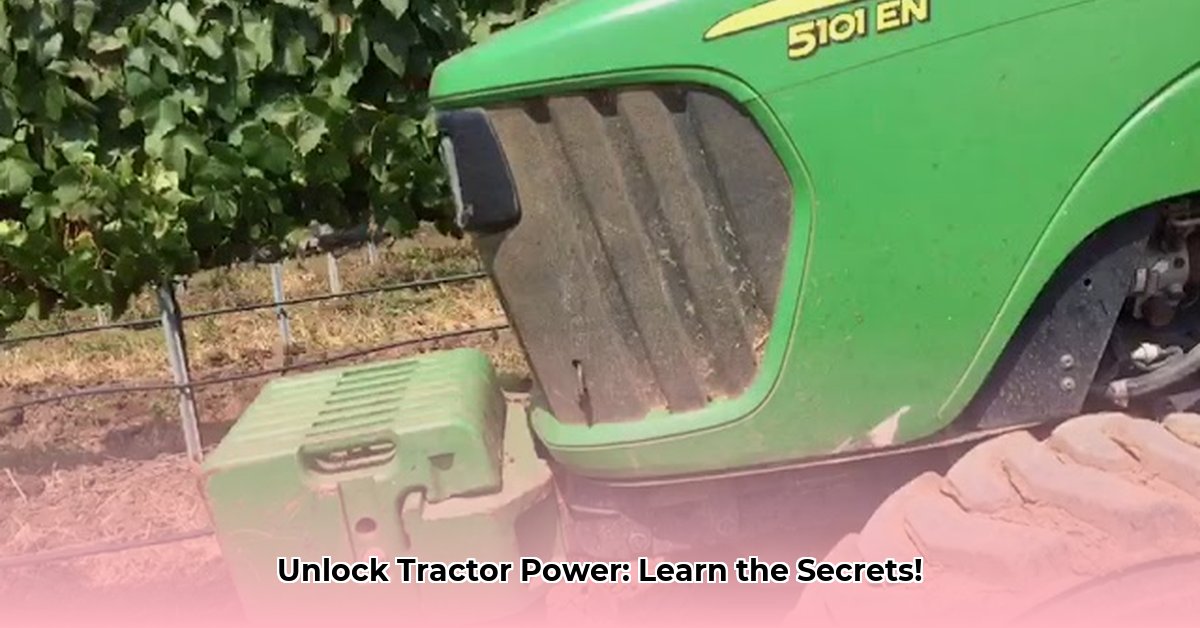
Pre-Operational Checks: Ensuring Tractor Readiness
Before starting your tractor, a thorough pre-operational check is essential for safety and efficient operation. Think of it as a pilot's pre-flight checklist – crucial for a successful and safe journey. This process helps prevent costly repairs and potential accidents. For more in-depth training, check out this helpful resource: tractor safety training.
Fluid Levels: Check engine oil, coolant, and hydraulic fluid levels. Low levels can lead to engine damage. Use the correct fluids specified in your owner's manual. (Remember, using the wrong fluid can void your warranty and cause serious damage.)
Tire Condition and Pressure: Inspect tires for cuts, bulges, or excessive wear. Proper inflation is crucial for traction and stability. Use a pressure gauge and consult your manual for the correct pressure. Under-inflation increases the risk of slippage, while over-inflation can lead to blowouts.
Brake Functionality: Test the brakes to ensure smooth and effective engagement. Spongy or ineffective brakes require immediate attention from a qualified mechanic. (Don't compromise on brakes; your life depends on them.)
Lighting and Signals: Verify all lights and signals are operational for optimal visibility, especially during low-light conditions. (Being seen is as important as seeing.)
Implement Security: If using implements (plows, harrows, etc.), ensure they're securely attached and fastened. Loose attachments are dangerous and can cause damage. Double-check all connections. (A loose attachment can become a dangerous projectile.)
Starting and Stopping the Tractor: Safe Procedures
Starting and stopping a tractor may seem simple, but proper technique minimizes wear and tear and improves safety.
Starting: Engage the parking brake. Ensure the gear lever is in neutral. Turn the key and allow the engine to reach operating temperature before engaging other controls. (Never override safety features.)
Stopping: Gradually ease off the accelerator. Avoid sudden braking. Once stopped, engage the parking brake immediately. (This prevents accidental movement and safeguards against rollbacks.)
Understanding Tractor Controls: A Comprehensive Overview
Tractor controls vary by model, so your owner's manual is your indispensable guide. However, common controls include:
Steering Wheel: Steers the tractor. Practice smooth, controlled movements, avoiding abrupt turns.
Gear Lever: Selects the appropriate gear for varying speeds and terrains. Lower gears are for slower speeds and heavier loads; higher gears for faster, lighter work. (Incorrect gear selection can lead to damage or loss of control.)
Throttle Pedal: Controls engine speed. Be mindful of the engine's load and avoid over-revving.
Clutch Pedal: Allows for smooth gear changes. It disengages the engine's power from the transmission, enabling seamless shifting. (Smooth clutch use is essential for gear longevity.)
Hydraulic Controls: Operate attachments. Familiarize yourself with these controls for safe and effective implement management.
Attaching Implements: Safe and Secure Connections
Always adhere strictly to the manufacturer's instructions when attaching implements. Improper attachment is a significant safety hazard. Take your time, double-check, and triple-check before operation. (Improper attachment can result in serious injury or equipment damage.)
Safe Driving Techniques: Mastering Tractor Maneuverability
Safe tractor operation requires practice and adherence to safe driving principles.
Speed Control: Adjust speed to terrain conditions. Slow and steady is crucial, especially on challenging terrains or when using implements. (Excessive speed is a major cause of tractor accidents.)
Turning: Turn slowly and smoothly, especially on slopes. Avoid sharp turns, which can lead to instability or rollovers.
Visibility: Maintain clear visibility. Be extra cautious when backing up, ideally with a spotter. (Blind spots are a serious hazard.)
Slope Operation: Proceed slowly on slopes, using a low gear. Avoid driving across slopes whenever possible. (Slopes are the most dangerous aspect of tractor operation.)
Emergency Procedures: Preparedness for Unexpected Events
Being prepared for emergencies is vital.
Engine Failure: If the engine stalls, calmly bring the tractor to a safe stop. Activate hazard lights and assess the situation.
Accidents: Remain calm. Contact emergency services immediately. Provide necessary details to first responders.
Routine Maintenance: Ensuring Long-Term Functionality and Safety
Regular maintenance extends the life of your tractor and ensures safe operation.
| Task | Frequency | Importance |
|---|---|---|
| Oil Changes | As per manufacturer | Prevents engine wear, extends engine life. |
| Filter Replacements | As per manufacturer | Ensures clean fluids, prevents component failure. |
| Tire Pressure Check | Weekly/Before Use | Maintains traction, prevents blowouts. |
| Brake Inspection | Regularly | Ensures safe and controlled operation. |
Remember, safe tractor operation is a continuous learning process. Prioritize safety, be patient, and consult your owner's manual frequently. Your safety and efficiency depend on it.